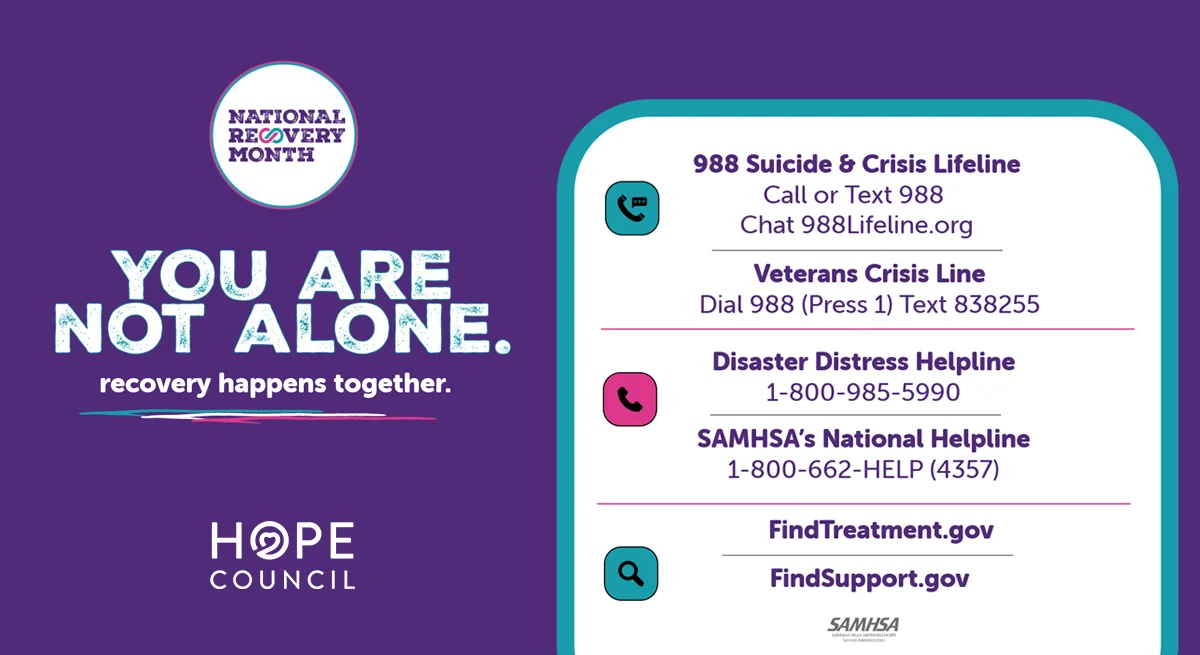
Every September, National Recovery Month reminds us of something that can never be said too often:
Recovery is possible.
It is possible for individuals. It is possible for families. And when communities choose compassion, connection and access to support over judgment and stigma, recovery becomes possible for more people.
This September, Hope Council on Alcohol & Other Drug Abuse joins communities across the country in recognizing National Recovery Month and honoring people living in recovery, those still finding their way, the families and loved ones walking beside them, and the professionals and community partners who help make recovery possible every day.
For Hope Council, it is also an opportunity to bring that conversation home to Kenosha County and celebrate the people who show us what recovery can look like.
Kenosha Recognizes National Recovery Month
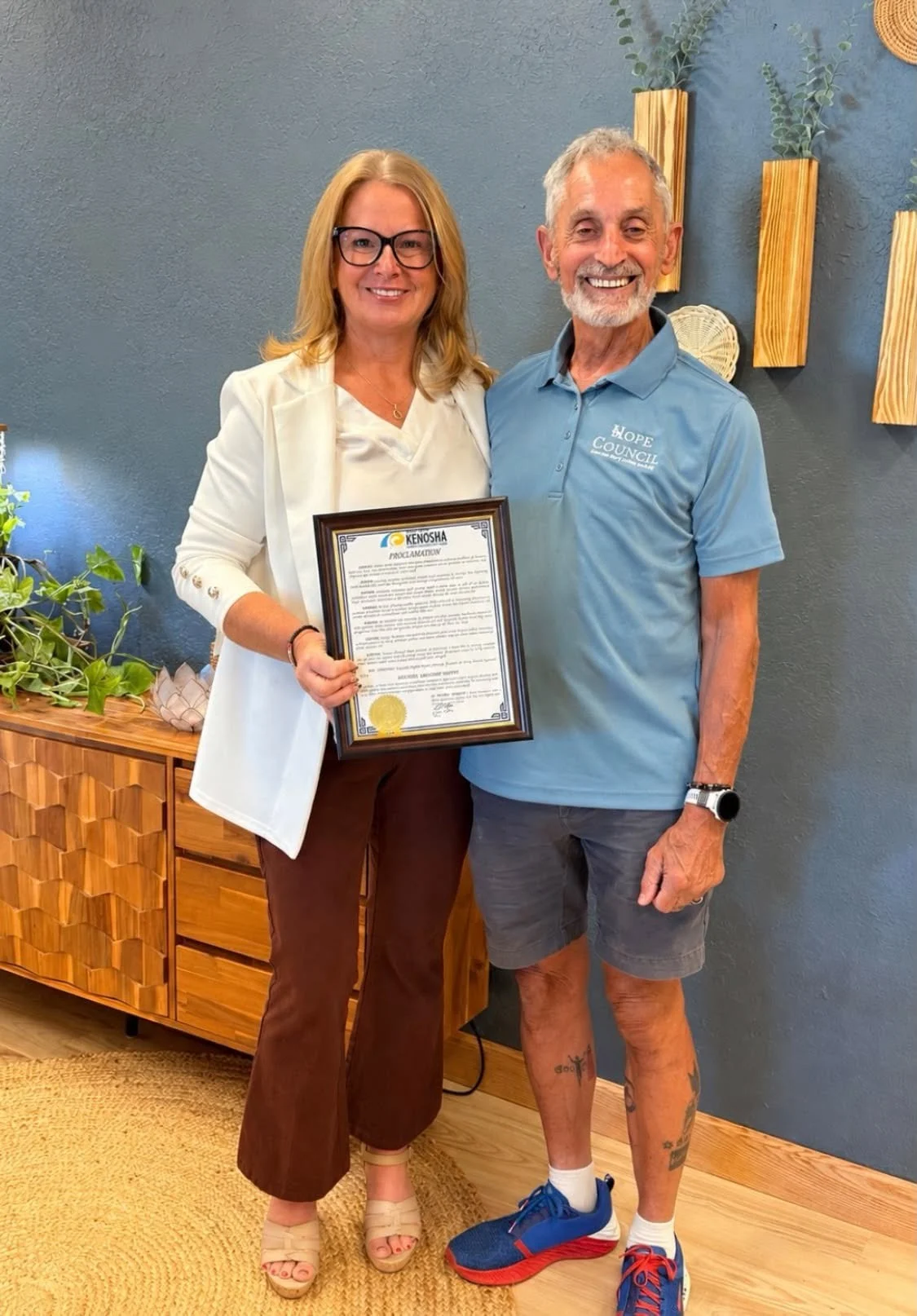
On August 25, Alderman Dominic Ruffalo presented Hope Council with a proclamation from the City of Kenosha officially recognizing September 2026 as National Recovery Month.
We are sincerely grateful to Alderman Ruffalo, Mayor David Bogdala and the members of the Kenosha Common Council who supported this proclamation and helped shine a light on the power and possibility of recovery.
The timing is especially meaningful.
August 31 marks International Overdose Awareness Day, a day to remember the lives lost to overdose, honor the families and loved ones forever changed by those losses, and recommit ourselves to ensuring people know that help, treatment, harm reduction, support and recovery are available.
We remember those we have lost. We stand beside those who are struggling.
And as September begins, we also celebrate recovery.
We celebrate milestones reached, relationships rebuilt, families strengthened, purpose rediscovered and lives reclaimed.
25 Years of Recovery and Two Powerful Stories
Here at Hope Council, we don’t have to look far to see what long-term recovery can make possible.
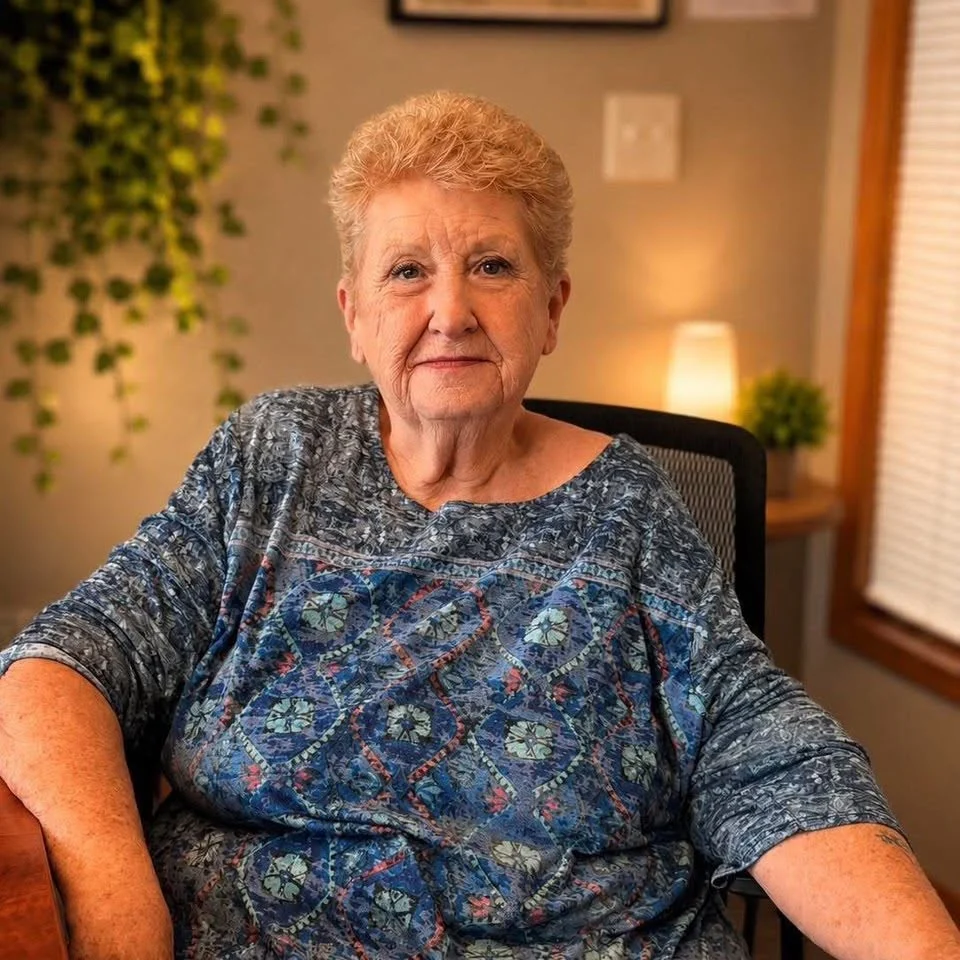
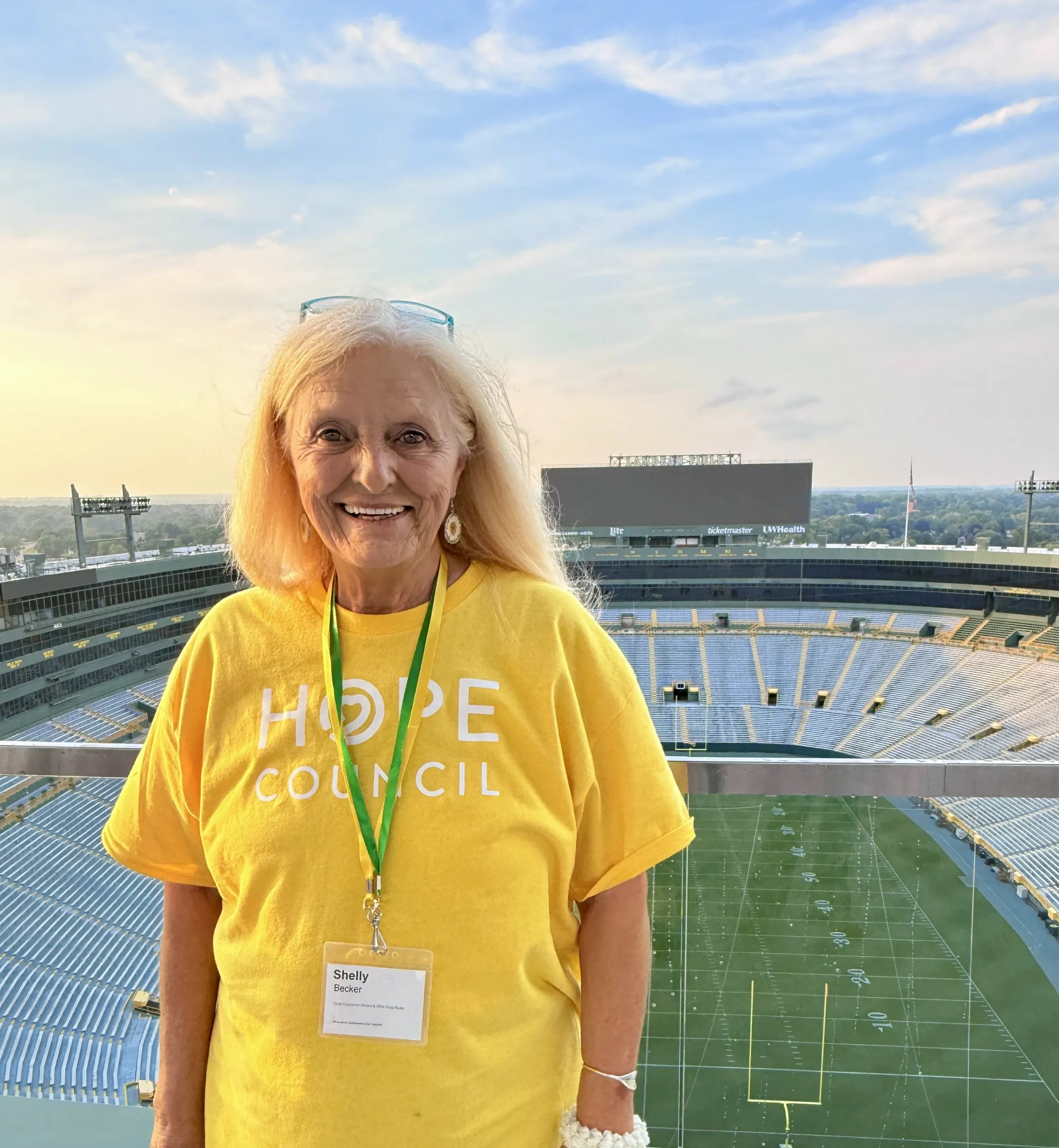
Together, Sue and Shelly represent 25 years of recovery.
But those years represent much more than a number.
They represent relationships. Careers. Challenges overcome. People helped. Ordinary days and extraordinary milestones. Laughter, connection, purpose and opportunities that addiction did not get to take away.
That is why we celebrate recovery.
Changing the Conversation About Addiction
Recovery Month is also an opportunity to challenge the stigma that continues to surround substance use disorders.
Stigma can isolate people at precisely the moment when they most need connection. It can prevent someone from acknowledging a problem, asking for help or trying again after a setback.
Sue wishes more people understood that addiction is not simply a lack of willpower or a moral failure.
“It takes tremendous courage to admit that there is a problem and ask for help,” she says.
And while accountability matters, Sue believes compassion must remain part of the conversation.
“There is an important difference between holding someone accountable for their actions and deciding they are beyond compassion or recovery. No one is beyond hope.”
Shelly emphasizes another important truth: recovery doesn’t look the same for everyone.
For some, the journey may be relatively direct. For others, it may include setbacks, detours or starting again. That doesn’t mean someone has failed.
“There are many pathways to recovery, and the right one is the one that meets you where you are,” Shelly says. “It truly takes a village, and EVERYONE needs a village.”
That belief is central to Hope Council’s work throughout Kenosha County.
Lived Experience Creates Connection
Sue and Shelly’s recovery journeys don’t just shape their personal lives. They also influence how they serve others at Hope Council.
Sue understands the excuses, denial and fear that can accompany addiction because she has experienced them herself. It allows her to ask difficult questions while approaching people with compassion.
“I can’t make anyone choose recovery,” Sue says, “but I can keep asking the questions that may help them get honest with themselves, and let them know that when they’re ready, recovery is possible.”
Shelly’s journey has taught her the importance of meeting people exactly where they are.
“My story is not your story, and the solutions that worked for me may not be the solutions that work for you,” she says.
What she can offer is “understanding without judgment, hope without pressure, and support without pretending I have all the answers.”
That’s a powerful description of what support can look like.
Listening. Connection. Compassion. Resources. And a next step.
You Just Have to Be Willing to Begin
For someone struggling with substance use, asking for help can feel overwhelming.
You may not know what recovery will look like. You may be afraid of what happens next. You may have tried before. You may not even be certain you’re ready.
Sue’s advice is simple:
“You don’t have to know exactly what recovery will look like, and you don’t have to do it perfectly. You just have to be willing to begin.”
Shelly echoes that message:
“By reaching out to me, you have already started taking that first step. You do not have to have everything figured out today. You just have to be willing to begin. Most importantly, you are not alone!”
Sometimes recovery starts with something as simple as a conversation, a phone call or a willingness to believe something different might be possible.
This September, We Choose Hope
When asked to finish the sentence “Recovery is possible because…”, Sue and Shelly both pointed toward the life that can exist beyond addiction.
Sue has watched people reclaim their lives, rebuild relationships and rediscover joy.
“Recovery is not simply learning how to survive without substances,” she says. “It is taking your life back and building one so full of purpose, peace, and joy that you no longer need to escape from it.”
Shelly puts it another way:
“Recovery is possible because I am living proof that addiction does not get the final word. WE DO RECOVER!”
“It is never too late to choose a different path, and no one is too far gone to find their way back.”
This Recovery Month, Hope Council celebrates every person in recovery, whether they are marking decades, years, months, days or simply contemplating their first step.
We remember those we have lost.
We stand beside those who are struggling.
We recognize the families and loved ones walking alongside them.
We thank the professionals, volunteers and community partners who make recovery possible.
And we will keep working toward a Kenosha County where asking for help is met with compassion and everyone has the opportunity to find hope.
Start with Hope
Hope Council meets people where they are with compassionate, judgment-free support for substance use, prevention and recovery throughout Kenosha County.
You might be looking for help for yourself. You might be worried about someone you love. You might be supporting someone in recovery or seeking prevention and education resources for your school, workplace or organization.
Whatever brings you to Hope Council, you don’t need to know exactly what you need before you reach out.
You just need a place to begin.