NEED HELP NOW? Call 911 for emergencies. Call or text 988 for mental health or substance use crises. Local 24/7 support: 262-657-7188.

262-658-8166

6103 39th Avenue, Kenosha, WI 53142

262-658-8166

6103 39th Avenue, Kenosha, WI 53142

NEED HELP NOW? Call 911 for emergencies. Call or text 988 for mental health or substance use crises. Local 24/7 support: 262-657-7188.

NEED HELP NOW? Call 911 for emergencies. Call or text 988 for mental health or substance use crises. Local 24/7 support: 262-657-7188.

Vaping & E-Cigarettes2026-07-30T13:55:29-05:00
Substance Information

Vaping & E-Cigarettes

Vaping is the most common way young people use nicotine today — and the devices are designed to be missed. This page covers what these products actually are, what nicotine does to a developing brain, how to recognize the devices, and the free quit support that exists for teens and adults. The products keep changing. The conversations need to keep up.

Vaping, at a glance

What it is

E-cigarettes — vapes, vape pens, pods, disposables — heat a liquid containing nicotine, flavorings, and other chemicals into an aerosol that’s inhaled.

Why it matters

Almost all vapes contain nicotine, often at very high concentrations — and nicotine affects the developing brain: learning, memory, attention, and mood.

Why teens start

Flavors, social circles, stress, marketing, and devices built to be concealed. None of it is mysterious, and none of it means a bad kid.

What helps

Early, calm conversations. Knowing what the devices look like. Free quit support. And school prevention programming that respects students’ intelligence.

The terms, in plain language

Disposables are the dominant products today.

Single-use devices in flavors and bright designs, discarded when empty, often containing as much nicotine as multiple packs of cigarettes.

  • Pod and refillable systems use cartridges or tanks of nicotine liquid.

  • Nicotine salts — standard in most modern products — deliver high nicotine concentrations smoothly, without the harshness that once made big doses self-limiting. Dependence can develop fast, especially in teens.

  • Labeling is unreliable: liquids sold as nicotine-free have repeatedly tested otherwise, and concentration labeling is inconsistent across brands.

Would you know a vaping device if you saw it?

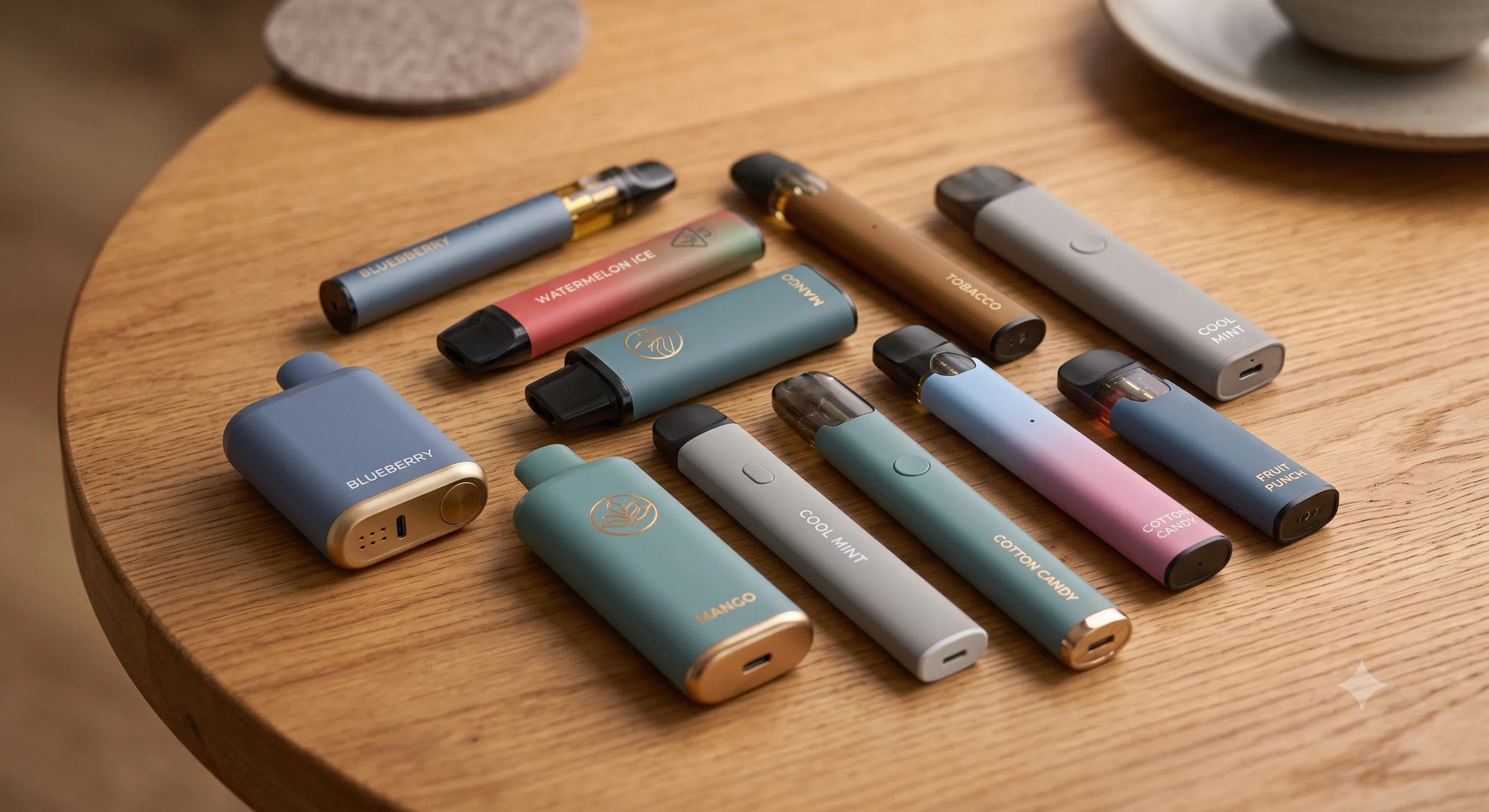
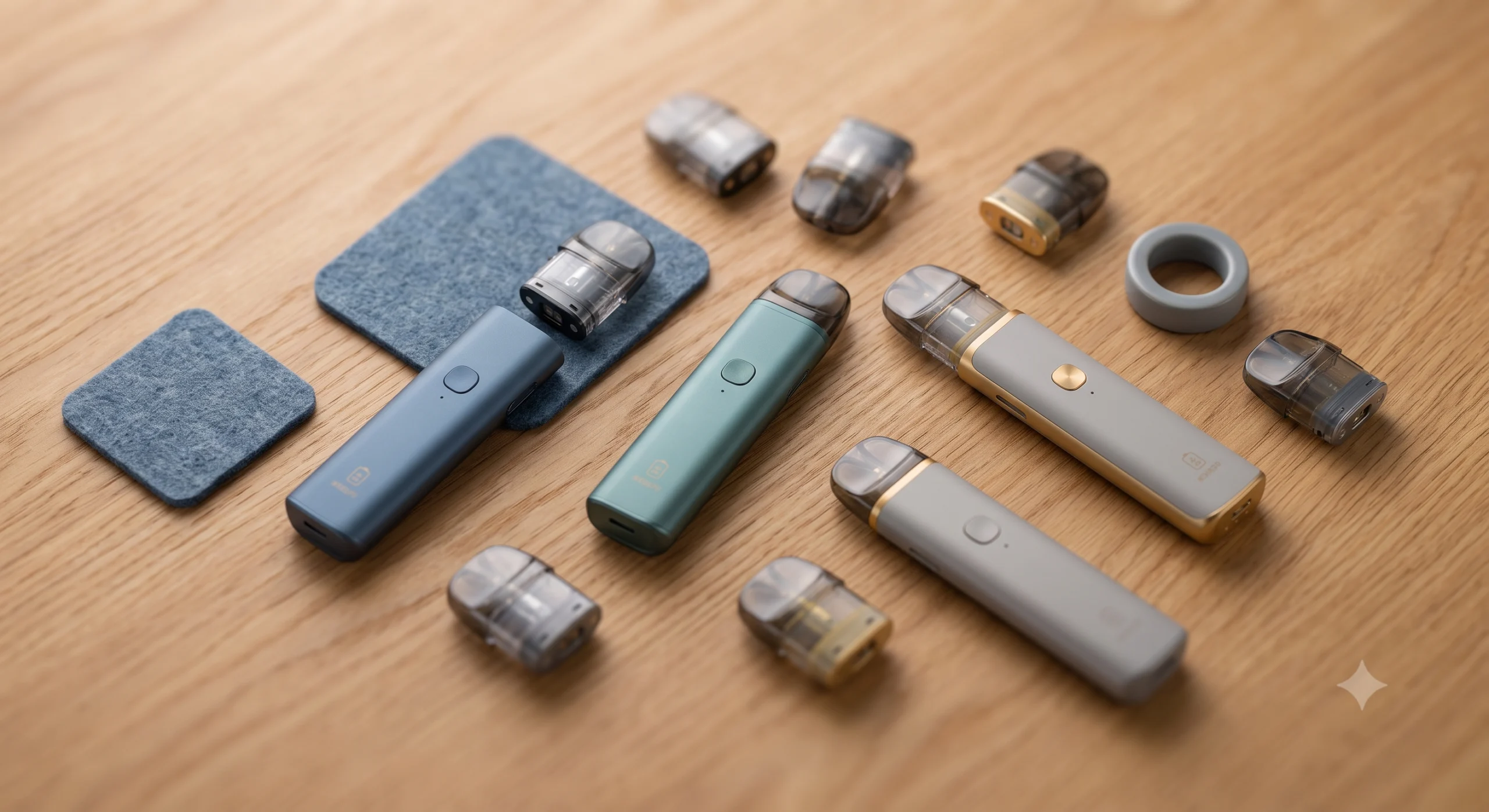
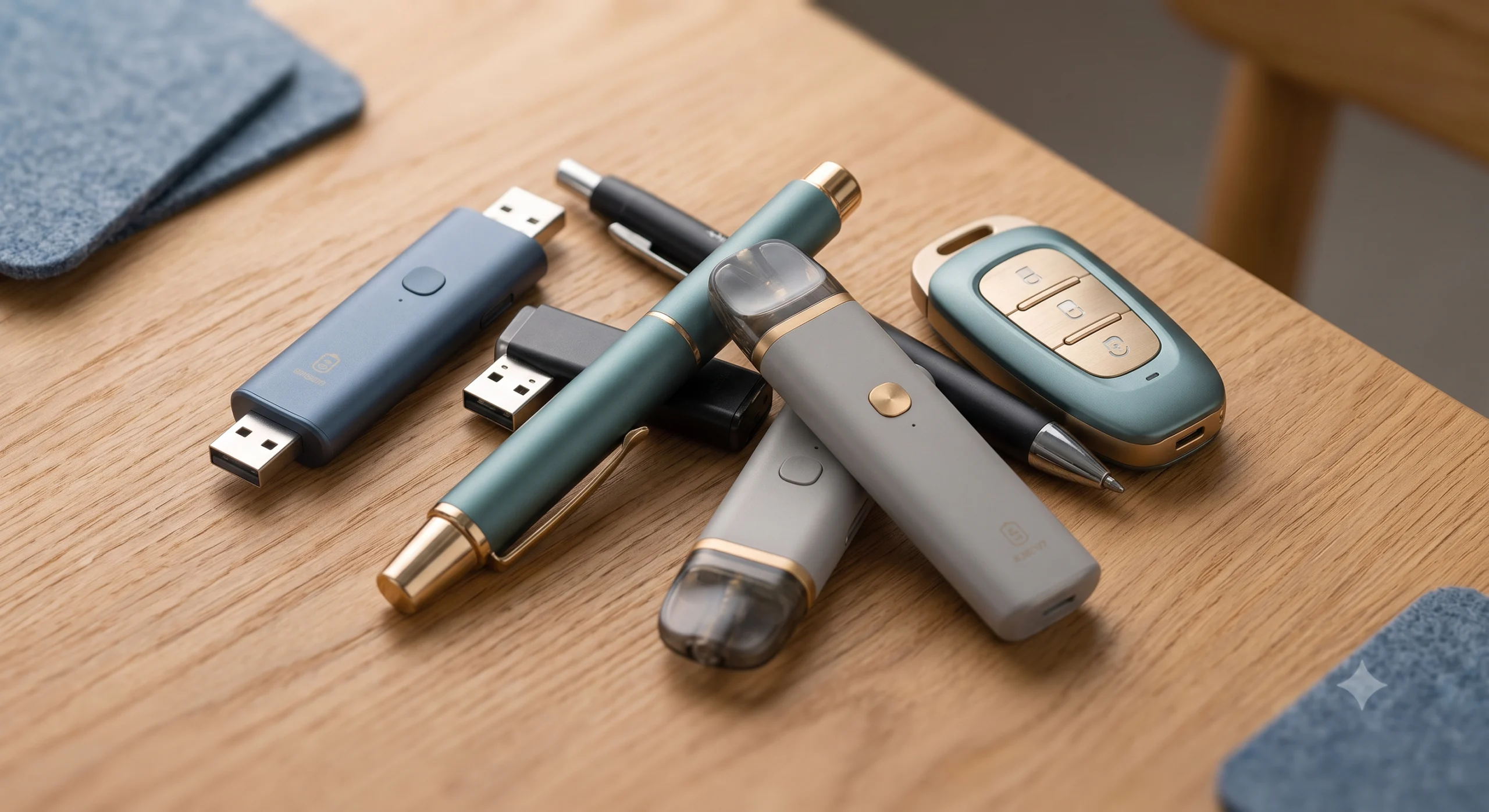
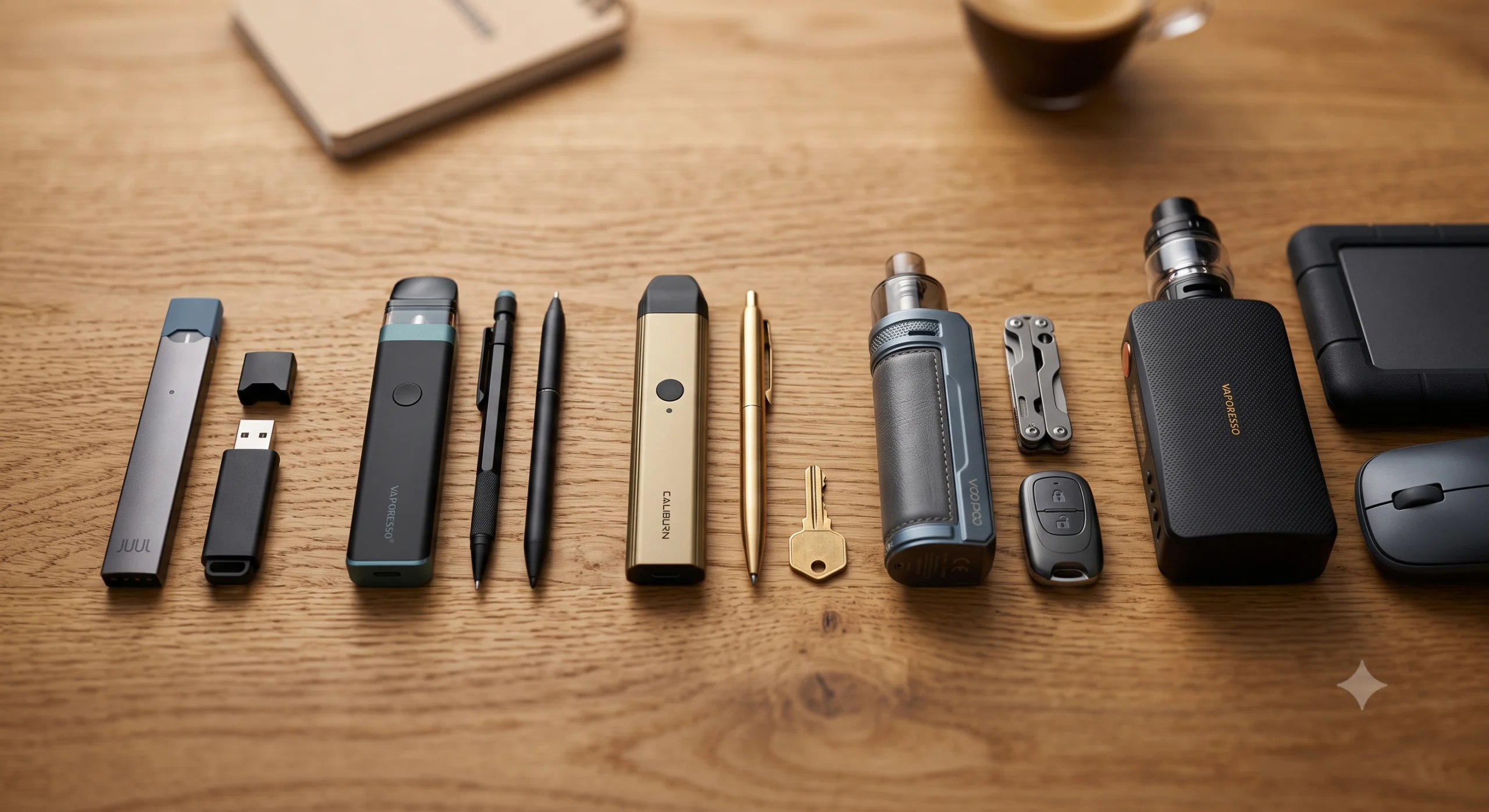
Devices are camouflaged in plain sight — many are designed to look exactly like everyday objects, and many recharge in a USB port. If something on this strip looks familiar from a backpack, a desk, or a car cupholder, it’s worth a closer look and a calm question.
Gemini Generated Image Jy1j46jy1j46jy1j

Disposables. Disposable vapes are the products teens actually use — small, flavored, and designed to look like anything but a nicotine product.
Gemini Generated Image Ucm0kmucm0kmucm0

Pod systems. Slim devices with replaceable pods — a single pod can contain as much nicotine as a pack of cigarettes.
Gemini Generated Image Kdi2wnkdi2wnkdi2

Disguised as everyday objects. USB drive, pen, highlighter, key fob — if it charges in a USB port and goes everywhere with them, look closer.
Gemini Generated Image Achz6xachz6xachz

What it’s not. Side by side, the differences are small. That’s the point — and why knowing matters more than searching ever will.


Where the risks actually land

Nicotine dependence

Modern products deliver high nicotine doses smoothly, and the developing brain builds dependence faster than the adult brain. Many teens who vape daily find quitting genuinely hard — that’s pharmacology, not weakness.

The developing brain

Youth nicotine exposure has negative implications for learning, memory, and attention — and is linked with mood and anxiety effects.

The aerosol isn’t water vapor

Vape aerosol contains chemicals beyond nicotine, including compounds of real concern — found even in products labeled nicotine-free. The full long-term picture is still unfolding, which is not the same as reassuring.

A path, not an endpoint

Young people who vape are significantly more likely to go on to smoke cigarettes. “It’s just vaping” undercounts what’s actually being started.

Nicotine liquid and small children

Liquid nicotine is poisonous to small children if swallowed or absorbed through skin — and flavored liquids smell like candy. If a child gets into vape liquid or a disposable: call the Poison Control help line at 1-800-222-1222 right away, and 911 if the child is vomiting, lethargic, or struggling to breathe. Store all devices and liquids like medication: up, away, and out of sight.

Worth a conversation if…

  • You found a device — or something you now suspect is one.
  • Trying to stop keeps not working.
  • Money or belongings are unaccounted for.
  • Vaping is the go-to for stress, boredom, or focus.
  • Mood, sleep, or school performance has shifted.
  • A school consequence has already happened.
A found device is a conversation, not a conviction. Calm beats confiscation-and-lecture every time — and there’s a whole page on how to have that conversation.

Quitting isn’t easy. We’re here to help.

Nicotine dependence is real, and quitting is genuinely hard — which is why free, evidence-based support exists:

  • For teens and young people: free, confidential text-based quit programs designed specifically for youth.

  • For adults: the Wisconsin Tobacco Quit Line at 1-800-QUIT-NOW — free coaching and support.

  • Locally: the KRW Tobacco-Free Coalition offers free cessation resources and can point anyone — teen or adult — to support that fits.

Support for families and schools

For you

Free quit support and youth-focused resources — no lectures attached.

For parents and caregivers

How to have the conversation without losing the room — and what changes are worth noticing.

For schools

Youth vaping prevention programming, delivered in partnership with schools and public health — honest, current, and built for real classrooms.

Coalition work

The KRW Tobacco-Free Coalition works across three counties on retailer compliance, youth access, and tobacco-free environments.

Common Questions

Isn’t vaping safer than smoking?2026-07-09T17:28:14-05:00

Vaping is not a safe activity. The aerosol contains chemicals of real concern, nicotine dependence is nicotine dependence, and for young people and anyone who doesn’t smoke, there is no health upside to start. Whatever vaping’s role for adults leaving cigarettes, that debate has nothing to do with a 15-year-old.

How much nicotine is in these products?2026-07-09T17:28:29-05:00

Often far more than people assume — a single pod or disposable can contain as much nicotine as a pack of cigarettes or more, delivered smoothly enough that it doesn’t feel like it.

I found a device. Now what?2026-07-09T17:28:42-05:00

Take a breath before the conversation. Calm and curious gets further than confiscation and lecture — start with Talking to Teens About Substance Use, and know that free teen quit support exists when they’re ready.

Can our school get vaping prevention programming?2026-07-09T17:28:56-05:00

Yes. Hope Council delivers youth vaping prevention in partnership with schools and community partners. Use the Request a Speaker form or call 262-658-8166.

Health content on this page aligns with current CDC, FDA, and Surgeon General guidance on e-cigarettes and youth nicotine use. Reviewed by Hope Council staff. July 23rd, 2026

Go to Top