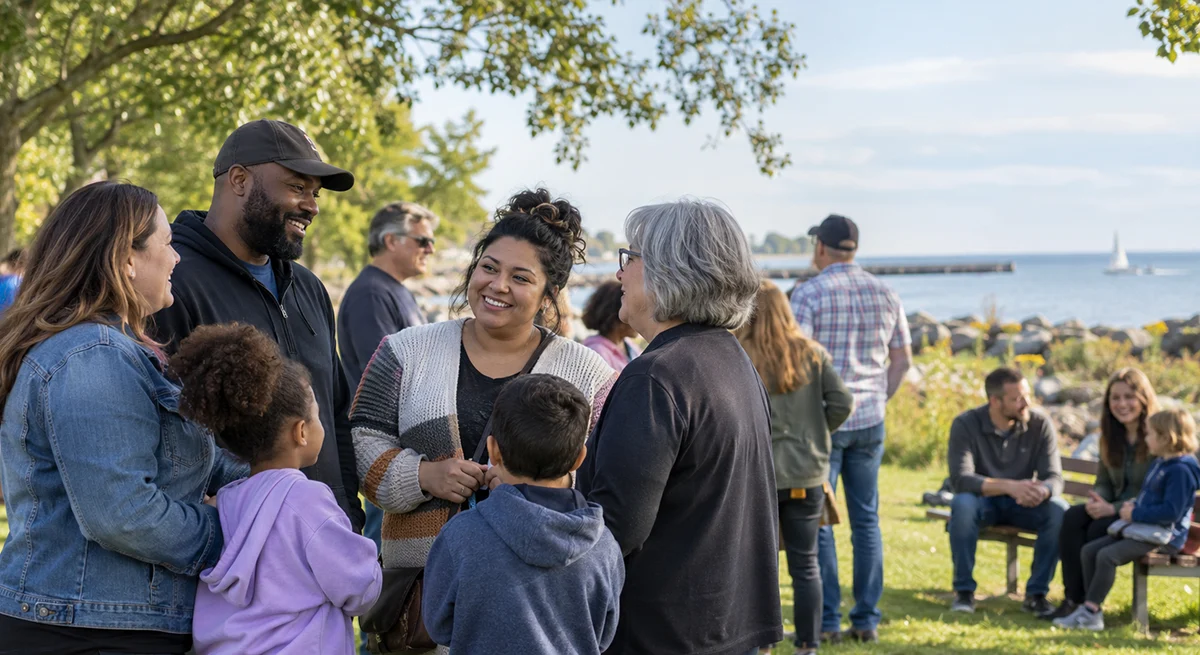
Recovery is deeply personal, but it doesn’t happen in a vacuum.
The people around us matter. Families matter. Schools and workplaces matter. Access to healthcare and treatment matters. Housing, employment and transportation matter. Community attitudes matter.
And connection matters.
Throughout National Recovery Month, the Great American Recovery campaign is highlighting several ideas about what helps people build and sustain recovery. They reflect something Hope Council has learned through decades of serving Kenosha County:
Recovery is stronger when communities work together.
So what does a recovery-supportive community actually look like?
Recovery Happens Together
Addiction can thrive in isolation. Recovery grows through connection.
Relationships, belonging, meaning and purpose can all help strengthen recovery. Families, workplaces, schools, faith communities, healthcare providers, recovery organizations and other community partners can help create environments where people feel connected and supported.
That’s why Hope Council’s work extends beyond the individuals who walk through our doors.
Throughout Kenosha County, we work alongside individuals and families, schools, courts, healthcare providers, law enforcement, public health, treatment and recovery organizations and other community partners.
No single organization can provide everything someone may need.
Treatment may be one piece. Peer support may be another. Stable housing, employment, transportation, healthcare, family relationships and community connection may all contribute to someone’s ability to build a healthy and fulfilling life.
When those resources work together rather than in isolation, we create a stronger safety net for our entire community.
Every partnership strengthens recovery.
Stories Can Change Stigma
One of the greatest barriers facing people affected by substance use isn’t a program or service.
Sometimes it’s the fear of being judged for needing one.
Stigma can prevent people from asking for help. It can affect how families respond, how workplaces treat people in recovery and how communities think about addiction.
Recovery stories offer a powerful counterpoint.
When people choose to share their experiences, they put a human face on recovery. They remind us that the person affected by addiction is someone’s parent, child, sibling, friend, employee, coworker or neighbor.
And they show us what is possible.
At Hope Council, Susan Benning and Shelly Becker recently celebrated 15 and 10 years in recovery, respectively.
Shelly describes her life today as one filled with “clarity, connection, purpose, and hope.”
Stories like theirs shift the focus from what addiction can take away to what recovery can make possible.
Relationships rebuilt.
Trust restored.
Purpose rediscovered.
Families strengthened.
Lives fully lived.
We should celebrate those things out loud.
Prevention, Youth and Families Are Part of Recovery, Too
Building a recovery-supportive community isn’t only about responding after someone develops a substance use disorder.
It also means investing in prevention.
Young people need accurate information, supportive adults, healthy connections and opportunities to develop skills that help them make informed decisions.
Families need resources, too.
Substance use rarely affects just one person. Parents, spouses, children, siblings and other loved ones may experience fear, grief, frustration, uncertainty and exhaustion.
Supporting families with education, resources and connection can strengthen the entire recovery environment surrounding an individual.
That’s why Hope Council’s work includes prevention and education as well as services for individuals and families affected by substance use.
When we invest in young people and families today, we invest in the future health of Kenosha County.
We All Have a Role to Play
A recovery-supportive Kenosha County isn’t built by Hope Council alone.
Every one of those actions makes our community stronger.
Start with Hope
Hope Council on Alcohol & Other Drug Abuse has been a trusted resource for individuals, families and communities throughout Kenosha County for decades.
Our work extends across the continuum of prevention, intervention, support and recovery, with practical, compassionate and judgment-free resources for people at many different points in their journey.
Maybe you are concerned about your own substance use.
Maybe you’re worried about someone you love.
Maybe you’re looking for support in recovery.
Or perhaps you’re an educator, employer, healthcare provider or community organization looking for prevention, education or resources.
You don’t have to know exactly what you need before you reach out.
Sometimes the first step is simply knowing where to start.
Start with Hope.